
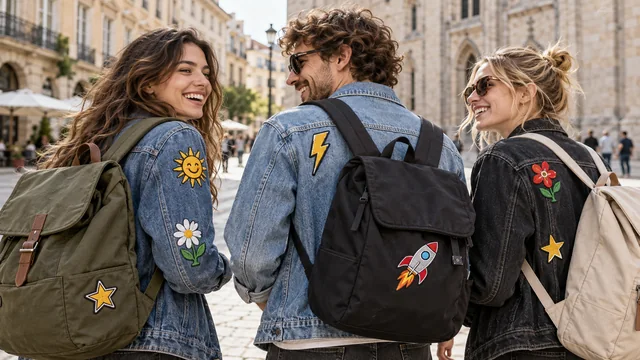
A patch can refresh an everyday accessory, make a bag easy to recognize or tie several garments together. Before choosing artwork, look at the item itself: fabric, seams, lining and folds all affect where a patch will sit best.
Take a clear photo
An emblem on the front of a backpack is easy to spot; on a pocket or strap it becomes a quieter detail. Jacket chest and sleeve are classic placements, while a bag may suit a motif near the closure. Leave room for zips, buttons and seams.
Simplify the artwork without losing its character
The artwork should fit the space. A long phrase needs a larger area and simple lettering; a compact symbol works on pockets and caps. Consider fabric thickness and texture, then review the preview before ordering.
Choose a size and backing
Sewing offers a reliable attachment for many garments and bags. An iron-on backing is convenient on compatible fabrics, but heat is unsuitable for every material or coating. Check the care label; if unsure, choose sewing or ask the garment maker.
A keepsake to share
A matching series can coordinate several accessories, with small color changes to distinguish each piece. The minimum order is five identical patches. Learn how to prepare a child’s drawing or design motorcycle-club patches.
Altre guide PatchMania
How to choose patches for backpacks, jackets and bags · From a child’s drawing to an embroidered patch · Sports team patches: designing an embroidered crest · Motorcycle club patches: designing a crest to wear · Cap patches: size and embroidery ideas · Patches on T-shirts: placement, fabric and design · Embroidered keychains: turn a design into an accessory · Group patches: a shared symbol for friends and clubs · Embroidered patches as gifts: personal ideas to share
PATCHMANIA
How to choose patches for backpacks, jackets and bags
A practical guide to personalizing backpacks, jackets and bags with embroidered patches: placement, size, fabric, backing and coordinated designs.
Create your patch →