
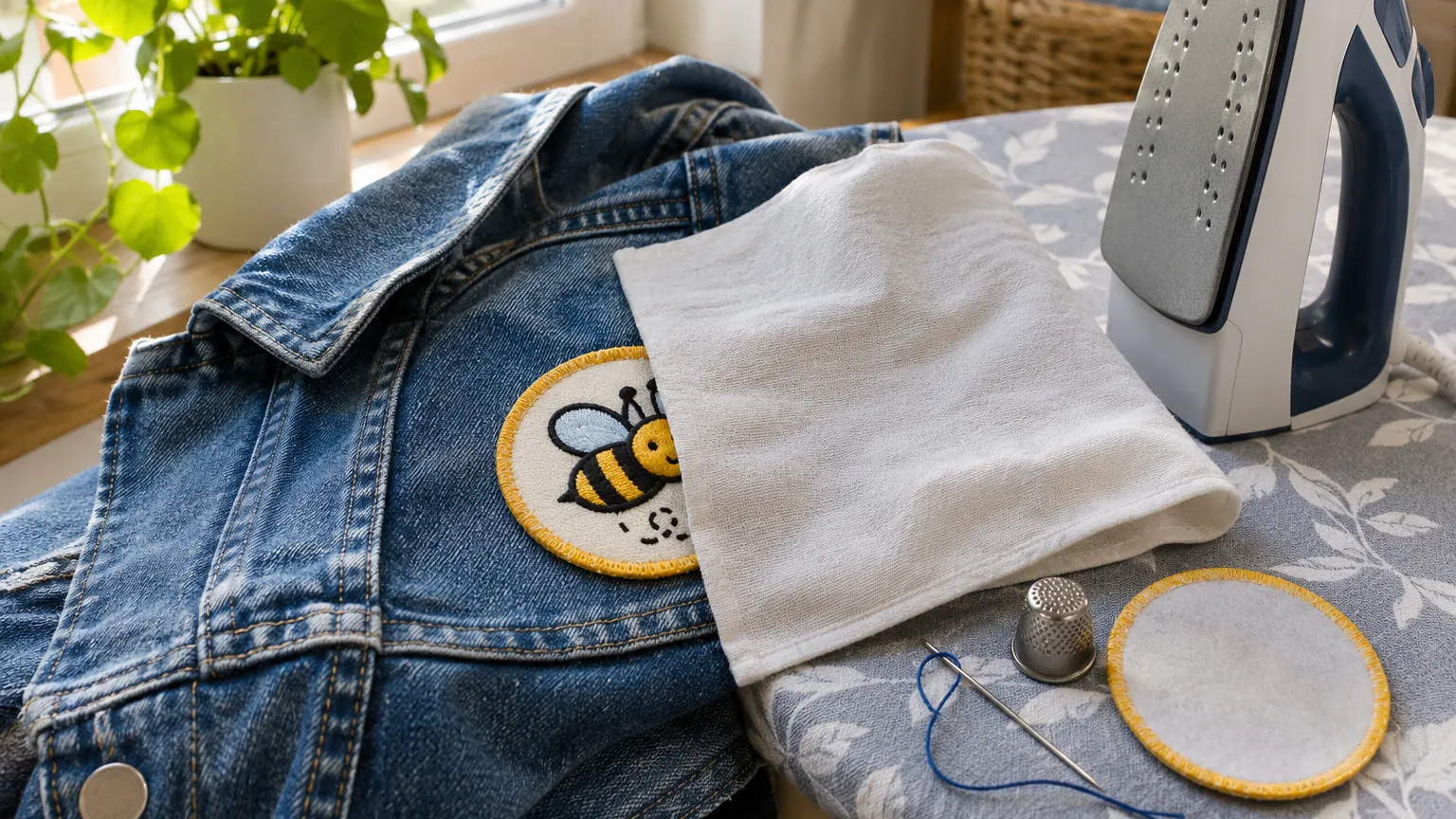
Iron-on or sew-on? It is the first question anyone ordering an embroidered patch asks. The answer depends on the fabric, how the garment is used and how long the patch should last. This guide covers the differences, a practical fabric-by-fabric list, step-by-step instructions for ironing on a patch and tips for washing or removing it.
The differences in short
A sew-on patch has a fabric back and is attached with needle and thread, by hand or machine. An iron-on patch has a layer of heat-activated adhesive on the back that melts under the iron and bonds to the fabric.
- Sew-on: the most durable option, suitable for almost any material, including leather, nylon and technical fabrics. It takes a bit more work or a tailor’s help.
- Iron-on: applied at home in minutes, no sewing skills needed, but only on fabrics that can take heat, such as cotton and denim.
On PatchMania you choose for each order a sew-on backing, at no extra cost, or an iron-on backing, for €0.50 more per patch.
Which to choose for each fabric
- Cotton, denim, canvas, twill: iron-on or sew-on.
- Cotton hoodies: iron-on or sew-on; with very frequent washing add a few stitches.
- Stretch fabrics and sports shirts: sew-on, because the adhesive can lift when the fabric stretches.
- Nylon, polyester, waterproof and technical fabrics: sew-on; heat can melt or mark the material.
- Leather and faux leather: sew-on, never with an iron.
- Velvet, silk and delicate fabrics: sew-on, carefully.
If in doubt, check the care label: if it says do not iron or shows a low temperature, choose sew-on.
How to iron on a patch
- Prepare the garment: it must be clean and dry. Iron the area to remove creases and moisture.
- Position the patch embroidered side up. For caps and sleeves, put a firm support inside, such as a rolled towel or a piece of cardboard.
- Cover with a thin cotton cloth to protect the embroidery from direct contact with the soleplate.
- Press without steam at the temperature allowed by the care label, usually the cotton setting, for about 20–30 seconds. Press firmly without rubbing.
- Repeat from the back: turn the garment inside out and press again for 20–30 seconds so the heat reaches the adhesive.
- Let it cool completely without moving the garment. Then check the edges: if a spot lifts, press that area again.
Wait at least 24 hours before the first wash. For heavily used items such as work jackets, backpacks or uniforms, you can add a few stitches around the edge: the adhesive keeps the patch in place and the stitching makes it even stronger.
How to sew on a patch
By hand, all you need is a sturdy needle and thread matching the patch border. Pin the patch in place, then sew small, even stitches around the edge, just inside the embroidered border. On thick jackets, leather or padded backpacks it is easier to ask a tailor or leather repair shop with the right machines.
How to wash embroidered patches
PatchMania patches are embroidered with 100% polyester thread, washable up to 60 °C. If the garment label shows a lower temperature, follow that. A few habits help them last:
- wash the garment inside out;
- use gentle cycles for iron-on patches;
- avoid hot tumble drying, which can soften the adhesive;
- never iron directly on the embroidery: always use a cloth.
How to remove an iron-on patch
Cover the patch with a cloth and heat it with the iron for a few seconds: the adhesive softens. Gently lift a corner and peel slowly while it is still warm, repeating if needed. Any adhesive residue can be softened again with heat and dabbed off with a cloth. Test on an inconspicuous area first, especially on coloured fabrics.
How to tell if a patch is iron-on
Look at the back: an iron-on patch has a smooth, slightly shiny or plastic-like layer. A sew-on patch has a matte fabric back with the stitch pattern visible.
Frequently asked questions
Do iron-on patches come off in the washing machine?
Applied correctly on cotton or denim they hold well. Washing the garment inside out, avoiding hot tumble drying and, for heavy use, adding a few stitches around the edge makes them last.
Can I iron a patch onto synthetic fabric?
Nylon, polyester and technical fabrics can be damaged by heat. On these materials choose the sew-on backing.
How long should I hold the iron on the patch?
Usually 20–30 seconds per side, without steam and with a pressing cloth, at the temperature allowed by the care label.
Can an iron-on patch also be sewn?
Yes, you can add stitching around the edge after ironing it on: the strongest option for heavily used garments.
Read also
- Patches for T-shirts: how to choose and apply an embroidered patch
- Patches for backpacks, jackets and bags: how to choose custom patches
- Custom hat patches: sizes, placement and how to attach them
- All PatchMania blog guides
PATCHMANIA
Choose your backing and create your patch
Upload your design, choose sew-on or iron-on and see the embroidered preview straight away. From 5 pieces.
Create your patch →